 In-Office
The Relationship Revolution: How Therapy Transforms Your Connections
 Jan. 19, 2026

We're all just walking each other home. - Ram Dass
I was volunteering at a bereavement weekend at Camp Simcha, sitting with children who had lost siblings to cancer. Their parents listened to a psychologist speak about grief—validating feelings no one else had understood, giving them permission to be with their pain. I watched their faces change as they were finally seen.
That's when I knew: I wanted to be someone who could create that kind of space—where people feel seen, understood, and allowed to be exactly where theyaI was volunteering at a bereavement weekend at Camp Simcha, sitting with children who had lost siblings to cancer. Their parents were listening to a psychologist speak about grief, validating feelings no one else had understood and giving them permission to sit with their pain. I watched their faces change as they were finally seen, as something unspoken was gently named and held. In that moment, I felt the power of what it means to create space for someone’s truth.
That was when I knew I wanted to be someone who could offer that kind of space, a place where people feel seen, understood, and allowed to be exactly where they are. I grew up with two parents who were therapists, and I witnessed firsthand what it looks like to truly help people in honest and meaningful ways. I also know what it means to struggle and to find your way through when things feel uncertain or overwhelming. What I witnessed growing up and what I have lived myself come together in how I show up today, grounded, compassionate, and deeply committed to walking alongside people as they navigate their own path. are.
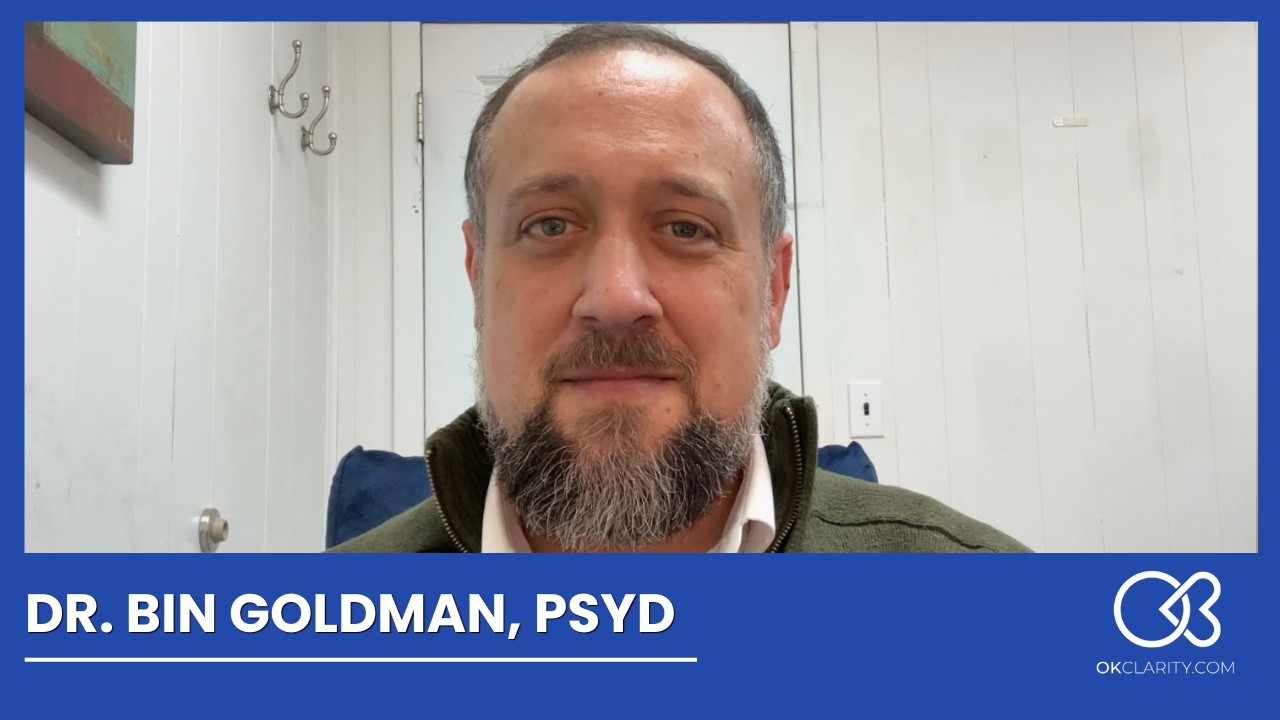
Both of my parents were therapists, and I grew up watching what it meant to truly help people. I also know what it means to struggle and find your way through. Those two things together—what I witnessed and what I've lived—have shaped how I work.
Your experiences and symptoms make sense. They are adaptations—ways your system learned to survive, protect you, and manage what once felt unmanageable. Therapy isn’t about erasing them. It’s about helping those protective strategies evolve so they can support you rather than run your life. My approach is relational and trauma-informed, integrating Internal Family Systems, somatic work, cognitive and behavioral techniques, and mindfulness practices. These tools are always in service of something deeper: understanding what’s happening in your nervous system and how you are making meaning of it in real time.
I am interested in what it’s like to be you—how your mind, body, history, relationships, and inner world all intersect to shape your experience. You are not a collection of symptoms to fix; you are a whole person navigating a complex human experience. Rather than trying to get rid of parts of you, we work toward understanding them with compassion, so they no longer have to run your life from the background. Much of our work is about developing a different relationship with your inner world—your emotions, your body, and the parts that learned to survive hard things.
For some people, spirituality naturally intersects with their struggles and their healing, speaking to the same human experience in different languages. For others, it is not part of the work at all, and I follow your lead on whether we engage with that dimension. Everything happens inside the relationship between us. You need to feel safe enough to explore hard places, and I bring deep empathy, presence, and often a bit of humor to that process. Therapy isn’t about being “fixed” by an expert; it’s about creating the conditions where your own capacity for insight, healing, and growth can emerge.
You can expect a space where you are taken seriously, listened to fully, and met with warmth and respect. I will be fully present—curious about your inner world, your story, and what brought you here. This is a space where your experiences matter, and where you can show up as you are without needing to perform or protect yourself.
Together, we’ll explore the patterns that keep you stuck—repetitive thoughts, strong emotional reactions, relational dynamics, and protective strategies that once served you but no longer do. We’ll build practical tools you can use in daily life while also going deeper to understand the emotional and relational roots of these patterns. Some of the work will be reflective and insight-oriented, and some will be experiential, helping you notice what’s happening in your body and nervous system so you can feel more grounded and safe.
We’ll explore the different parts of you: the part that worries, the part that gets angry, the part that feels ashamed, and the part trying to hold everything together. Part of the work is helping these parts relate to one another with curiosity and compassion instead of conflict. We’ll also work on how you relate to your thoughts, noticing when a thought is just a thought, not a command or a truth. That subtle shift—from “I am a failure” to “I’m having the thought that I’m a failure”—can change everything.
Real-world problem-solving is also part of our work. Whatever’s happening in your life—the conflict at work, the decision you’re stuck on, the conversation you need to have—we’ll approach it together, not just processing feelings but figuring out what to do. We’ll track what your body is telling you: the tightness in your chest, the impulse to shut down, the moment you disappear from the room even while sitting there. Sometimes we’ll talk and make sense of things; other times we’ll focus on body-based work—grounding, resourcing, or simply letting feelings be without words.
The real work happens in the relationship between us. You’ll learn that you can be fully seen without being rejected, that boundaries can exist and the relationship will survive, and that repair is possible. You’ll leave with tools and language for what’s happening inside you, but more importantly, you’ll develop a different relationship with yourself—less shame, more compassion, and the capacity to stay present when things get hard. The work is collaborative: we think together, feel together, problem-solve together. You’ll feel safe enough to explore difficult places, supported enough to grow, and respected enough to become more fully yourself.
I’ve worked within the frum community for nearly twenty years, both in private practice and through community organizations serving Jews from a wide range of backgrounds. I facilitate groups with Ray of Hope for adult survivors of childhood sexual abuse and serve as a trauma specialist on Ohel’s trauma response team. I’ve also held administrative roles at ACHIEVE, among other positions. These experiences have given me a nuanced understanding of many communities—heimish, chassidish, yeshivish, modern orthodox, Sephardic, and progressive. I understand each community’s identity, values, and approaches, as well as the threads they share in common.
I know the real pressures people face: shidduchim anxiety, the weight of being the only frum person in your family or the only one who isn’t, religious OCD versus religious trauma, raising children while questioning everything, or navigating differences in observance with a spouse. I understand the isolation of being gay in a community where that feels impossible, and the challenge of staying connected to emunah after being hurt by people who claimed to represent it. As a frum clinician and therapy client myself, I know how important it is for a therapist to truly understand what you mean when you talk about your experiences. Therapy isn’t just about symptoms and interventions—it’s about supporting a whole person in the context of their life, values, and world.
At the same time, no two people in a community are the same. Everyone has their own relationship with community norms, with emunah, with how and how much they fit in. I use shared understanding as shorthand when it helps, but I also practice careful curiosity. What I share with you as a Jew runs deeper than any differences between us, but no matter how similar your upbringing or community affiliation might be to mine, I approach each person as a unique individual, committed to learning who you are and how best to support you.
16 years in practice
$275 - $350
I have known Dr. Goldman at the communal level for over 20 years. On numerous occasions, I have found him to be a voice of reason and clarity, and a great sounding board for complex ideas and problems.
Ben Rothke, CISSP CISM Verified
I’ve met few people as warm and non judgemental and human as Dr. Bin Goldman. It’s quite rare to see and trust such authentic empathy emanating from someone’s eyes. Highly recommend as an extremely safe practitioner.
Leah L Verified
I've had the the opportunity to spend time with Dr. Goldman and I can't recommend him highly enough. His clinical knowledge, sincerity, and presence are palpable. He's genuinely empathetic and committed to those in need.
B.P. Verified
Dr. Goldman is an empathetic, compassionate and deeply thoughtful mental health professional who truly meets people where they are. He has a remarkable ability to translate complex concepts into clear, meaningful guidance that is empowering for a wide range of audiences - whether he is speaking to educators or providing direct interventions to support individuals through personal challenges. His work leaves people feeling understood, supported and equipped with practical tools they can use, as he connects and communicates with others with clarity, warmth and respect. His work is grounded, impactful and he is focused first and foremost on people, not just problems. An outstanding mental health professional.
C.N. Verified

Therapy doesn’t just help you feel better—it changes how you relate, communicate, set boundaries, and connect in every relationship.
Full ArticleNot a professional member yet? Get listed!