The Relationship Revolution: How Therapy Transforms Your Connections
 Jan. 19, 2026


 Southfield
"I use a humanistic and strengths-based approach, which means I start from the belief that you have the ability to navigate and overcome the challenges you are facing. Our work begins with exploring the issue together, taking the …
"This group is for you if you sense that something in how you connect with others could be different, even if you can't quite put a finger on what. Maybe you tend to keep things to yourself and …

"My approach to therapy is warm, direct, collaborative, and deeply person-centered. I believe therapy works best when it feels like a genuine partnership, where you feel heard, respected, and supported while also being gently challenged to grow. I …
 Jerusalem
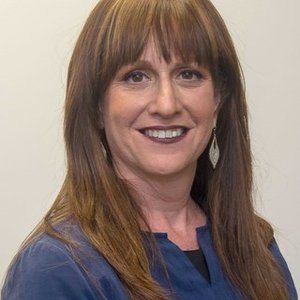
"My approach is very individual. I conceptualize the case using psychoanalytic and psychodynamic principles, but when it comes to the actual work we do together, I want to understand what the client wants and where I think they …
 Aventura
"I work integratively because I do not believe that one therapeutic method can fit every person, every struggle, or every story. My approach draws from somatic therapy, Internal Family Systems (IFS), Dialectical Behavior Therapy (DBT), Cognitive Behavioral Therapy …
 Brooklyn
"I see therapy as a collaborative process where we balance the exploration of meaning with the pursuit of embodied change. My approach is relational and depth-oriented, drawing on psychoanalytic and existential traditions, with somatic and behavioral modalities woven …
 Clifton
"In my approach to therapy, I adopt an active and collaborative stance. I firmly believe that the therapeutic journey should be a joint effort, where both you and I play pivotal roles. I'm not one to shy away …
 Manhattan
"I specialize in psychodynamic psychotherapy, which is an empirically supported treatment. I work with people suffering from a range of psychological problems, including anxiety, depression, relationship problems, stress, loneliness, addictions, personality disorders, and more. Many of the people …

"I consider myself a detective of the mind, partnering with clients to solve the mystery of the symptom or behavior that brings them into treatment. From my perspective, binge eating or bulimia is not the core problem, but …
 New York
"The therapeutic techniques and modalities I employ in my treatment approach include Cognitive Behavioral Therapy (CBT), Dialectical Behavior Therapy (DBT), Interpersonal Therapy, Psychoanalytic Therapy, and Critical Incident Stress Debriefing. With my extensive experience and specialized training across these …

"I take a holistic, relational, and integrative approach to my work, with the belief that healing happens within a safe and meaningful connection. I strive to create a warm and empathic environment where clients feel seen, heard, and …
 Jackson
"My main goal in therapy is to make sure you feel like a whole person, not a diagnosis, not a project, and not something that needs to be fixed. I don’t believe your struggle defines you. You are …

Therapy doesn’t just help you feel better—it changes how you relate, communicate, set boundaries, and connect in every relationship.
Full Article Nov. 17, 2024
In this week's segment, we will do an overview of five types of therapy and how they might be able to help you. An educated consumer is a strong consumer,…
Full Article June 23, 2024

Am I too dependent on my therapist? This is a question that many people in therapy find themselves asking. Especially people with a history of attachment wounding…
Full ArticleNot a professional member yet? Get listed!