
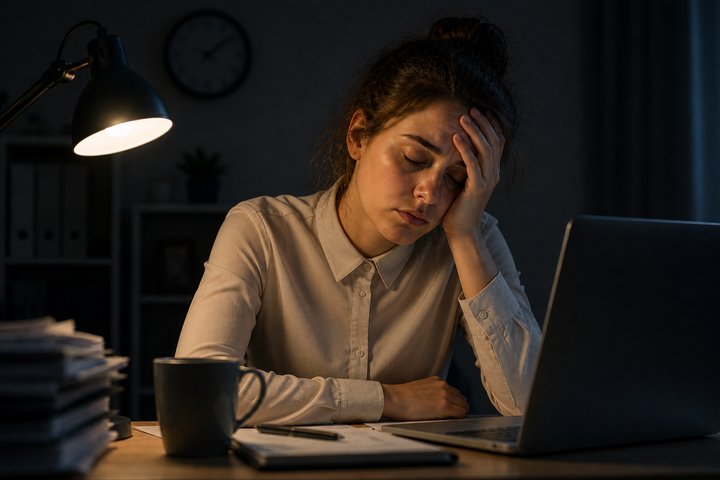
There’s a certain kind of exhaustion that doesn’t make sense.
You go to sleep at a reasonable hour. You’re in bed long enough. From the outside, everything should be fine. And yet you wake up tired, move through the day in a fog, feel more irritable than you’d like, and wonder why your motivation, patience, and emotional balance seem to be slipping.
For many people, this isn’t just stress or life catching up. It’s a sleep issue hiding in plain sight. One of the most overlooked culprits is sleep apnea, and its impact goes far beyond snoring or disrupted breathing. It reaches directly into mental health, emotional stability, and overall quality of life.
What’s Really Happening During Sleep Apnea
Sleep apnea is a condition in which breathing repeatedly stops and starts during sleep. In obstructive sleep apnea, the airway partially or fully collapses, cutting off airflow for brief periods. The brain senses the lack of oxygen and jolts the body awake just enough to resume breathing. This can happen dozens or even hundreds of times a night, often without the person being aware of it.
The result is fragmented sleep. Not just less sleep, but lower quality sleep. The deep, restorative stages that the brain depends on are constantly interrupted. Even if someone spends eight hours in bed, their brain never fully settles into the kind of sleep that repairs, resets, and regulates the system.
The Sleep–Mental Health Connection
Sleep is one of the primary ways the brain regulates mood. During the night, the brain processes emotional experiences, balances neurotransmitters, resets stress hormones like cortisol, and clears out metabolic waste that accumulates during the day. When that process is disrupted, the effects show up quickly in how a person feels and functions.
People with untreated sleep apnea often experience increased irritability, anxiety, and low mood. Their emotional threshold drops, meaning smaller challenges feel bigger. Their ability to cope weakens. Over time, this can look and feel a lot like depression.
The relationship runs both directions. Individuals with apnea are significantly more likely to develop depressive symptoms, and people diagnosed with depression often have underlying sleep disturbances that haven’t been identified. It becomes a cycle where poor sleep worsens mood, and low mood further disrupts sleep, reinforcing the pattern.
The Fatigue–Mood Loop
One of the strongest links in this chain is fatigue.
Not the kind of tiredness that improves with a nap or a good night’s rest, but a deep, persistent exhaustion that lingers no matter how much time is spent in bed. This kind of fatigue drains mental clarity, slows thinking, and reduces motivation. It becomes harder to focus, harder to make decisions, and harder to engage fully with life.
Emotionally, fatigue lowers resilience. When the brain is depleted, it has less capacity to regulate emotions. Patience shortens, frustration builds more quickly, and even positive experiences can feel muted. Many people start to interpret this as a personal or psychological issue, when in reality the brain simply isn’t getting the recovery it needs.
It’s Not Just “Fat, Old Men”
One of the biggest reasons sleep apnea goes undiagnosed is the outdated stereotype of who gets it.
While excess weight can increase risk, sleep apnea affects women, younger adults, and even individuals who are physically fit. Hormonal changes, especially during pregnancy or menopause, can increase risk in women. Structural factors like jaw position, airway size, nasal obstruction, and genetics often play a major role regardless of body size.
Because of this, many people never consider the possibility that they might have sleep apnea. They attribute their symptoms to stress, aging, or personality, and the underlying issue quietly continues.
Signs Your Sleep Might Be Affecting Your Mental Health
Sleep apnea often shows up more clearly during the day than at night.
At night, there may be snoring, restless sleep, or occasional gasping. During the day, the signs tend to include chronic fatigue, brain fog, morning headaches, irritability, and difficulty concentrating. Over time, these symptoms can blend into what looks like anxiety or depression.
When someone feels consistently off mentally and emotionally, but can’t quite explain why, sleep quality is often part of the picture.
Why Treating Apnea Isn’t Always the Whole Solution
Even when sleep apnea is diagnosed and treated, not everyone feels fully restored right away.
Treatments like CPAP machines or oral appliances can improve breathing during sleep, but sleep and mental health are layered. The breathing issue may be one major piece, but it often exists alongside other factors like chronic stress, circadian rhythm disruption, and long-standing patterns in the nervous system.
Each breathing interruption during the night triggers a stress response, training the body to stay alert even when it’s supposed to be resting. Over time, the nervous system can become conditioned to remain on guard, making deep, restorative sleep harder to access.
That pattern can carry into the day as heightened anxiety, difficulty relaxing, or a constant sense of internal tension.
Restoring Sleep, Restoring the Mind
Addressing sleep apnea effectively means looking at the whole picture.
Medical support to stabilize breathing is often essential, but it works best when combined with improving sleep habits, supporting the nervous system, and addressing the emotional and physiological patterns that developed over time.
When these pieces come together, the shift can be profound. People often describe clearer thinking, more stable mood, better energy, and a renewed sense of engagement with life.
If someone is dealing with ongoing fatigue, low mood, or a sense that their mental health has been slipping without a clear reason, it’s worth looking more closely at sleep. Not just how long they’re sleeping, but how well they’re breathing and how deeply they’re resting.
Sleep apnea is far more common than most people realize, and its impact reaches into every corner of life. When it’s properly understood and addressed, the body and mind often respond in ways that feel almost like a reset.
Because when sleep is truly restored, everything else has a chance to come back online.

Comments (0)
Add Comment
Login to join the discussion