
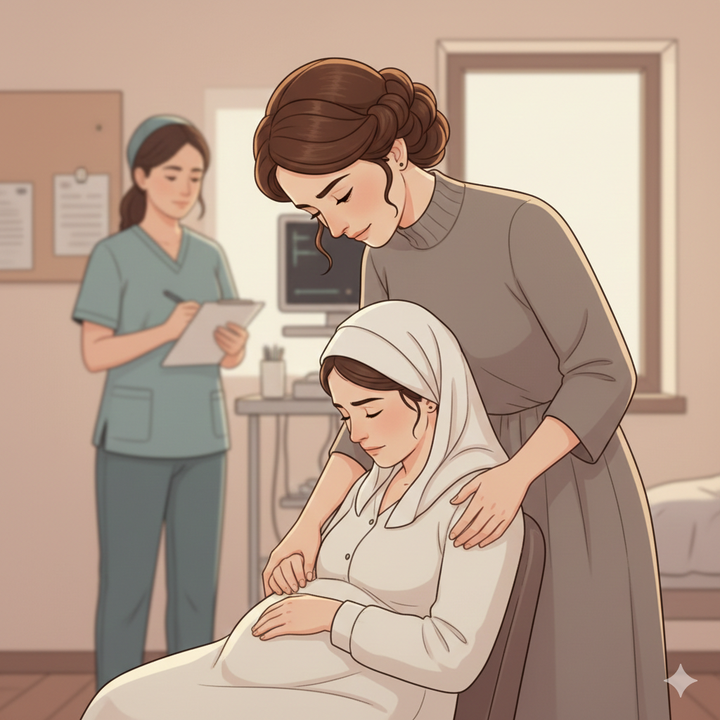
Doula vs Midwife: the difference that actually matters
Most people ask doula vs midwife because they want to know who does what during birth. The clearer answer is this: midwives manage medical safety; doulas protect the birth experience. Both matter, but they are not interchangeable.
A midwife is there to make clinical decisions. A doula is there so you are not alone in the hardest, longest, most intense hours of labor. That distinction shapes everything else.
What a midwife does
Midwives are licensed medical professionals. They diagnose, monitor, and treat. Their role centers on clinical responsibility and outcomes.
They can:
-
Monitor maternal and fetal health
-
Perform cervical exams and clinical assessments
-
Order labs, prescribe medications, and manage complications
-
Deliver babies and provide medical postpartum care
Certified Nurse Midwives and Certified Midwives complete advanced medical training, often at the master’s level, and practice within regulated healthcare systems. Their priority is safety and medical progress.
That focus matters. It also limits how much time they can spend with any one person in labor.
What a doula does
A doula provides continuous, non-medical support before, during, and after birth. No charting. No shift changes. No competing patients.
A doula supports:
-
Emotional steadiness when labor gets overwhelming
-
Physical comfort through movement, positioning, breath, touch, and pacing
-
Advocacy by helping you understand choices and voice preferences
-
Continuity, so someone knows your plan, your fears, and your rhythms
Doulas do not check dilation, monitor heart rates, prescribe medications, or make medical decisions. That boundary is intentional. It allows full attention on the person giving birth.
If a midwife watches the monitors, a doula watches you.
Training and authority: not a hierarchy, a division
This comparison often turns into a false hierarchy. Medical authority does not replace human presence.
Midwives train for diagnosis, intervention, and medical judgment. Doulas train for support, communication, pain coping, and emotional regulation under pressure. These are different skill sets, not competing ones.
During labor, those differences show up quickly. A midwife may come and go based on clinical need. A doula stays.
The support gap doulas fill
Birth is not only a medical event. It is also a physical endurance test and an emotional one.
Hospitals and birth centers are designed around safety protocols, not sustained one-on-one care. Even the best midwife cannot remain bedside for hours when managing multiple patients.
That gap is where doulas work.
A doula:
-
Helps labor stay productive through movement and positioning
-
Keeps partners grounded instead of overwhelmed
-
Translates medical language into real-time understanding
-
Holds continuity when plans change
This is not about preference. It is about physiology and psychology under stress.
Postpartum: where roles diverge again
After birth, the split becomes clear.
Midwives focus on:
-
Physical recovery
-
Healing, bleeding, vitals, and medical follow-up
-
Infant health checks within their scope
Doulas focus on:
-
Emotional processing of the birth
-
Breastfeeding and feeding support
-
Adjustment at home, rest, and practical care
-
Recognizing when extra medical or mental health support is needed
One treats. One supports. Both protect outcomes in different ways.
Can you have both a doula and a midwife?
Yes. And for many families, that combination works best.
A midwife ensures medical safety. A doula ensures you are supported, heard, and not carrying the experience alone.
When labor gets long, intense, or unpredictable, having both means no one is stretched beyond their role. Care improves because responsibilities are clear.
Choosing between them, or choosing a team
If you are deciding between doula vs midwife, the real question is not “which is better.” It is “what kind of support do I want during the hardest hours of birth?”
If you want:
-
Medical management and delivery → you need a midwife
-
Continuous presence, advocacy, and emotional steadiness → you want a doula
Many people choose both because birth is not one-dimensional.

 Far Rockaway